There are no items in your cart
Add More
Add More
| Item Details | Price | ||
|---|---|---|---|

Sat Oct 10, 2026
A powerful, friendly guide to thinking bigger, building smarter, protecting your energy, and creating a business that supports the life you actually want.
By Sunil Chaudhary | Digital Success Coach | An expanded editorial article inspired by a long coaching conversation. Examples and reflections are illustrative, not verbatim quotations.
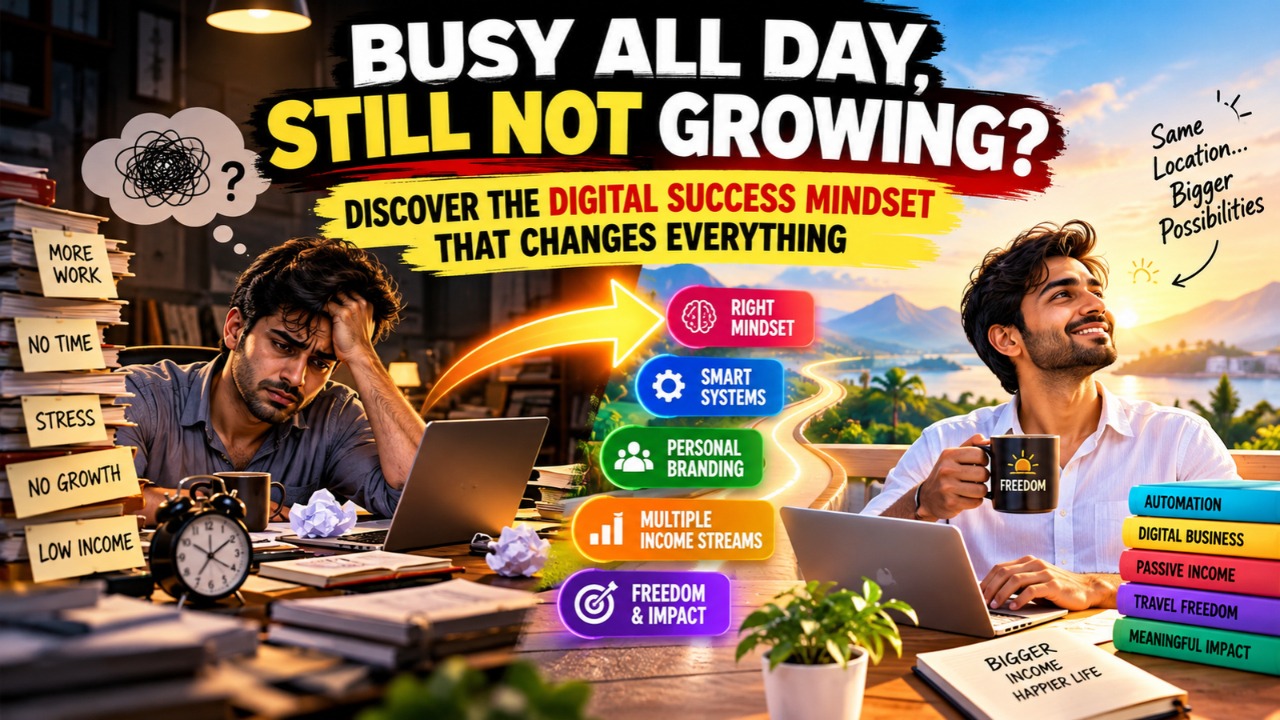
Have you ever reached the end of a very busy day and wondered what you actually built? You answered calls, watched videos, checked messages, attended a meeting, and perhaps even learned something new. Yet the important project is still waiting. That feeling is more common than we admit. It is also the perfect place to begin an honest conversation about success.
Success is often presented as a secret formula. In reality, progress usually looks like a series of ordinary decisions made with unusual consistency. You clarify your goal. You identify a person you can help. You build a small system. You show up. You listen. You improve. And you repeat.
The most useful business conversations do not always begin with a perfect slide deck. Sometimes they begin with a simple question: are we really building a business, or are we merely staying busy?
Here is the central idea: Success is not only about working harder. It is about asking whether our actions, thinking, environment, and systems are taking us in the same direction.
This matters because a business is not built inside a motivational moment. It is built in the ordinary hours that follow. When the excitement fades, your decisions need to remain simple enough to repeat. Start by identifying the next useful step, then give it a time and a place on your calendar. Small commitments that are actually completed are more powerful than impressive plans that never leave a notebook.
Consider the everyday situation of someone starting from scratch. There may be a job, family responsibilities, limited savings, and very little spare time. The answer is not to pretend those constraints do not exist. The answer is to design a plan that respects them. A focused thirty-minute session can be used to outline one lesson, answer one customer question, or improve one page. That is real movement.
It also helps to separate facts from feelings. You might feel behind because another creator has a larger audience. But their audience size does not tell you whether your next customer will trust you. Look instead at the problem you solve, the quality of your explanation, and the ease with which someone can take the next step. These are areas where you have influence.
Here is a practical exercise. Take a blank sheet and create three headings: what I know, what I need to learn, and what I will do next. Keep the final column short. If you write twenty actions, you will probably avoid most of them. If you choose one or two, you can make progress today and learn from the result tomorrow.
There is another important side to this idea: people are not machines. Rest, relationships, and emotional clarity matter. Sustainable progress does not require constant pressure. It requires an honest rhythm of action and review. Give yourself enough space to notice what is working and enough courage to change what is not.
When someone says they want to earn more, I like to ask what that extra income would change. More family time? Freedom from a job? Better support for parents? A meaningful answer gives the goal a human face.
Here is the central idea: Before entering a program or launching a project, understand why it matters to you. A strong reason creates commitment, while a vague wish rarely survives a difficult week.
This matters because a business is not built inside a motivational moment. It is built in the ordinary hours that follow. When the excitement fades, your decisions need to remain simple enough to repeat. Start by identifying the next useful step, then give it a time and a place on your calendar. Small commitments that are actually completed are more powerful than impressive plans that never leave a notebook.
Consider the everyday situation of someone starting from scratch. There may be a job, family responsibilities, limited savings, and very little spare time. The answer is not to pretend those constraints do not exist. The answer is to design a plan that respects them. A focused thirty-minute session can be used to outline one lesson, answer one customer question, or improve one page. That is real movement.
It also helps to separate facts from feelings. You might feel behind because another creator has a larger audience. But their audience size does not tell you whether your next customer will trust you. Look instead at the problem you solve, the quality of your explanation, and the ease with which someone can take the next step. These are areas where you have influence.
Here is a practical exercise. Take a blank sheet and create three headings: what I know, what I need to learn, and what I will do next. Keep the final column short. If you write twenty actions, you will probably avoid most of them. If you choose one or two, you can make progress today and learn from the result tomorrow.
There is another important side to this idea: people are not machines. Rest, relationships, and emotional clarity matter. Sustainable progress does not require constant pressure. It requires an honest rhythm of action and review. Give yourself enough space to notice what is working and enough courage to change what is not.
Imagine two people who both work ten hours. One spends the day reacting to messages. The other publishes a useful resource, speaks with qualified prospects, and improves a follow-up system. The hours match; the assets do not.
Here is the central idea: Activity is not automatically progress. Revenue, customer value, skill growth, and repeatable processes are better indicators than hours spent scrolling or attending meetings.
This matters because a business is not built inside a motivational moment. It is built in the ordinary hours that follow. When the excitement fades, your decisions need to remain simple enough to repeat. Start by identifying the next useful step, then give it a time and a place on your calendar. Small commitments that are actually completed are more powerful than impressive plans that never leave a notebook.
Consider the everyday situation of someone starting from scratch. There may be a job, family responsibilities, limited savings, and very little spare time. The answer is not to pretend those constraints do not exist. The answer is to design a plan that respects them. A focused thirty-minute session can be used to outline one lesson, answer one customer question, or improve one page. That is real movement.
It also helps to separate facts from feelings. You might feel behind because another creator has a larger audience. But their audience size does not tell you whether your next customer will trust you. Look instead at the problem you solve, the quality of your explanation, and the ease with which someone can take the next step. These are areas where you have influence.
Here is a practical exercise. Take a blank sheet and create three headings: what I know, what I need to learn, and what I will do next. Keep the final column short. If you write twenty actions, you will probably avoid most of them. If you choose one or two, you can make progress today and learn from the result tomorrow.
There is another important side to this idea: people are not machines. Rest, relationships, and emotional clarity matter. Sustainable progress does not require constant pressure. It requires an honest rhythm of action and review. Give yourself enough space to notice what is working and enough courage to change what is not.
Many talented people know what it feels like to make decisions around money. A college option may look exciting on paper and impossible in the family budget. That experience can create frustration, but it can also create empathy and resourcefulness.
Here is the central idea: A person’s educational journey can be shaped by affordability, family responsibilities, and opportunity. None of those factors should be used as a permanent verdict on potential.
This matters because a business is not built inside a motivational moment. It is built in the ordinary hours that follow. When the excitement fades, your decisions need to remain simple enough to repeat. Start by identifying the next useful step, then give it a time and a place on your calendar. Small commitments that are actually completed are more powerful than impressive plans that never leave a notebook.
Consider the everyday situation of someone starting from scratch. There may be a job, family responsibilities, limited savings, and very little spare time. The answer is not to pretend those constraints do not exist. The answer is to design a plan that respects them. A focused thirty-minute session can be used to outline one lesson, answer one customer question, or improve one page. That is real movement.
It also helps to separate facts from feelings. You might feel behind because another creator has a larger audience. But their audience size does not tell you whether your next customer will trust you. Look instead at the problem you solve, the quality of your explanation, and the ease with which someone can take the next step. These are areas where you have influence.
Here is a practical exercise. Take a blank sheet and create three headings: what I know, what I need to learn, and what I will do next. Keep the final column short. If you write twenty actions, you will probably avoid most of them. If you choose one or two, you can make progress today and learn from the result tomorrow.
There is another important side to this idea: people are not machines. Rest, relationships, and emotional clarity matter. Sustainable progress does not require constant pressure. It requires an honest rhythm of action and review. Give yourself enough space to notice what is working and enough courage to change what is not.
A certificate can mark a milestone. A working landing page demonstrates a capability. The ideal learning journey gives you both understanding and the confidence to implement.
Here is the central idea: Learning becomes valuable when it produces something useful: a page, a lesson, a customer conversation, a video, or a system that solves a real problem.
This matters because a business is not built inside a motivational moment. It is built in the ordinary hours that follow. When the excitement fades, your decisions need to remain simple enough to repeat. Start by identifying the next useful step, then give it a time and a place on your calendar. Small commitments that are actually completed are more powerful than impressive plans that never leave a notebook.
Consider the everyday situation of someone starting from scratch. There may be a job, family responsibilities, limited savings, and very little spare time. The answer is not to pretend those constraints do not exist. The answer is to design a plan that respects them. A focused thirty-minute session can be used to outline one lesson, answer one customer question, or improve one page. That is real movement.
It also helps to separate facts from feelings. You might feel behind because another creator has a larger audience. But their audience size does not tell you whether your next customer will trust you. Look instead at the problem you solve, the quality of your explanation, and the ease with which someone can take the next step. These are areas where you have influence.
Here is a practical exercise. Take a blank sheet and create three headings: what I know, what I need to learn, and what I will do next. Keep the final column short. If you write twenty actions, you will probably avoid most of them. If you choose one or two, you can make progress today and learn from the result tomorrow.
There is another important side to this idea: people are not machines. Rest, relationships, and emotional clarity matter. Sustainable progress does not require constant pressure. It requires an honest rhythm of action and review. Give yourself enough space to notice what is working and enough courage to change what is not.
It is easy to spend an evening watching other people debate, react, and entertain. They may earn attention and revenue while the viewer ends the evening with nothing new to show. The answer is not to reject entertainment; it is to decide its place.
Here is the central idea: Entertainment and news have their place, but endless consumption can crowd out the focused work that builds a future.
This matters because a business is not built inside a motivational moment. It is built in the ordinary hours that follow. When the excitement fades, your decisions need to remain simple enough to repeat. Start by identifying the next useful step, then give it a time and a place on your calendar. Small commitments that are actually completed are more powerful than impressive plans that never leave a notebook.
Consider the everyday situation of someone starting from scratch. There may be a job, family responsibilities, limited savings, and very little spare time. The answer is not to pretend those constraints do not exist. The answer is to design a plan that respects them. A focused thirty-minute session can be used to outline one lesson, answer one customer question, or improve one page. That is real movement.
It also helps to separate facts from feelings. You might feel behind because another creator has a larger audience. But their audience size does not tell you whether your next customer will trust you. Look instead at the problem you solve, the quality of your explanation, and the ease with which someone can take the next step. These are areas where you have influence.
Here is a practical exercise. Take a blank sheet and create three headings: what I know, what I need to learn, and what I will do next. Keep the final column short. If you write twenty actions, you will probably avoid most of them. If you choose one or two, you can make progress today and learn from the result tomorrow.
There is another important side to this idea: people are not machines. Rest, relationships, and emotional clarity matter. Sustainable progress does not require constant pressure. It requires an honest rhythm of action and review. Give yourself enough space to notice what is working and enough courage to change what is not.
Two learners may sit in the same workshop but need completely different help. One needs confidence on camera. Another needs offer positioning. A third has an excellent offer but no follow-up process.
Here is the central idea: Group learning can provide community, while individual attention helps uncover the specific bottleneck that is keeping one person stuck.
This matters because a business is not built inside a motivational moment. It is built in the ordinary hours that follow. When the excitement fades, your decisions need to remain simple enough to repeat. Start by identifying the next useful step, then give it a time and a place on your calendar. Small commitments that are actually completed are more powerful than impressive plans that never leave a notebook.
Consider the everyday situation of someone starting from scratch. There may be a job, family responsibilities, limited savings, and very little spare time. The answer is not to pretend those constraints do not exist. The answer is to design a plan that respects them. A focused thirty-minute session can be used to outline one lesson, answer one customer question, or improve one page. That is real movement.
It also helps to separate facts from feelings. You might feel behind because another creator has a larger audience. But their audience size does not tell you whether your next customer will trust you. Look instead at the problem you solve, the quality of your explanation, and the ease with which someone can take the next step. These are areas where you have influence.
Here is a practical exercise. Take a blank sheet and create three headings: what I know, what I need to learn, and what I will do next. Keep the final column short. If you write twenty actions, you will probably avoid most of them. If you choose one or two, you can make progress today and learn from the result tomorrow.
There is another important side to this idea: people are not machines. Rest, relationships, and emotional clarity matter. Sustainable progress does not require constant pressure. It requires an honest rhythm of action and review. Give yourself enough space to notice what is working and enough courage to change what is not.
Think of your business as a journey for the customer. Someone discovers a helpful video, visits a simple page, requests a guide, receives useful messages, and eventually decides whether to work with you. Each step should feel natural.
Here is the central idea: A digital business becomes easier to manage when discovery, trust, offers, follow-up, delivery, and customer support connect clearly.
This matters because a business is not built inside a motivational moment. It is built in the ordinary hours that follow. When the excitement fades, your decisions need to remain simple enough to repeat. Start by identifying the next useful step, then give it a time and a place on your calendar. Small commitments that are actually completed are more powerful than impressive plans that never leave a notebook.
Consider the everyday situation of someone starting from scratch. There may be a job, family responsibilities, limited savings, and very little spare time. The answer is not to pretend those constraints do not exist. The answer is to design a plan that respects them. A focused thirty-minute session can be used to outline one lesson, answer one customer question, or improve one page. That is real movement.
It also helps to separate facts from feelings. You might feel behind because another creator has a larger audience. But their audience size does not tell you whether your next customer will trust you. Look instead at the problem you solve, the quality of your explanation, and the ease with which someone can take the next step. These are areas where you have influence.
Here is a practical exercise. Take a blank sheet and create three headings: what I know, what I need to learn, and what I will do next. Keep the final column short. If you write twenty actions, you will probably avoid most of them. If you choose one or two, you can make progress today and learn from the result tomorrow.
There is another important side to this idea: people are not machines. Rest, relationships, and emotional clarity matter. Sustainable progress does not require constant pressure. It requires an honest rhythm of action and review. Give yourself enough space to notice what is working and enough courage to change what is not.
The temptation is to launch five courses, three memberships, and seven bonuses. But a single focused workshop that solves one urgent problem may teach you more about the market than months of polishing a giant offer.
Here is the central idea: A clear problem, a specific audience, a realistic outcome, and a straightforward delivery process make a stronger starting point than a huge catalog of vague promises.
This matters because a business is not built inside a motivational moment. It is built in the ordinary hours that follow. When the excitement fades, your decisions need to remain simple enough to repeat. Start by identifying the next useful step, then give it a time and a place on your calendar. Small commitments that are actually completed are more powerful than impressive plans that never leave a notebook.
Consider the everyday situation of someone starting from scratch. There may be a job, family responsibilities, limited savings, and very little spare time. The answer is not to pretend those constraints do not exist. The answer is to design a plan that respects them. A focused thirty-minute session can be used to outline one lesson, answer one customer question, or improve one page. That is real movement.
It also helps to separate facts from feelings. You might feel behind because another creator has a larger audience. But their audience size does not tell you whether your next customer will trust you. Look instead at the problem you solve, the quality of your explanation, and the ease with which someone can take the next step. These are areas where you have influence.
Here is a practical exercise. Take a blank sheet and create three headings: what I know, what I need to learn, and what I will do next. Keep the final column short. If you write twenty actions, you will probably avoid most of them. If you choose one or two, you can make progress today and learn from the result tomorrow.
There is another important side to this idea: people are not machines. Rest, relationships, and emotional clarity matter. Sustainable progress does not require constant pressure. It requires an honest rhythm of action and review. Give yourself enough space to notice what is working and enough courage to change what is not.
A social post may be seen for a day. A well-structured answer to a common customer question can remain useful much longer. A short video can lead to an article, a checklist, and an email sequence.
Here is the central idea: Content works best when it creates reusable value through searchable articles, videos, email relationships, downloadable resources, and repeatable teaching material.
This matters because a business is not built inside a motivational moment. It is built in the ordinary hours that follow. When the excitement fades, your decisions need to remain simple enough to repeat. Start by identifying the next useful step, then give it a time and a place on your calendar. Small commitments that are actually completed are more powerful than impressive plans that never leave a notebook.
Consider the everyday situation of someone starting from scratch. There may be a job, family responsibilities, limited savings, and very little spare time. The answer is not to pretend those constraints do not exist. The answer is to design a plan that respects them. A focused thirty-minute session can be used to outline one lesson, answer one customer question, or improve one page. That is real movement.
It also helps to separate facts from feelings. You might feel behind because another creator has a larger audience. But their audience size does not tell you whether your next customer will trust you. Look instead at the problem you solve, the quality of your explanation, and the ease with which someone can take the next step. These are areas where you have influence.
Here is a practical exercise. Take a blank sheet and create three headings: what I know, what I need to learn, and what I will do next. Keep the final column short. If you write twenty actions, you will probably avoid most of them. If you choose one or two, you can make progress today and learn from the result tomorrow.
There is another important side to this idea: people are not machines. Rest, relationships, and emotional clarity matter. Sustainable progress does not require constant pressure. It requires an honest rhythm of action and review. Give yourself enough space to notice what is working and enough courage to change what is not.
Some teachers are calm. Some are energetic. Some use stories, humor, or direct questions. Your communication becomes memorable when the style fits your character and the audience understands your message.
Here is the central idea: Authenticity comes from clear thinking and recognizable delivery, not copying the loudest creator in your niche.
This matters because a business is not built inside a motivational moment. It is built in the ordinary hours that follow. When the excitement fades, your decisions need to remain simple enough to repeat. Start by identifying the next useful step, then give it a time and a place on your calendar. Small commitments that are actually completed are more powerful than impressive plans that never leave a notebook.
Consider the everyday situation of someone starting from scratch. There may be a job, family responsibilities, limited savings, and very little spare time. The answer is not to pretend those constraints do not exist. The answer is to design a plan that respects them. A focused thirty-minute session can be used to outline one lesson, answer one customer question, or improve one page. That is real movement.
It also helps to separate facts from feelings. You might feel behind because another creator has a larger audience. But their audience size does not tell you whether your next customer will trust you. Look instead at the problem you solve, the quality of your explanation, and the ease with which someone can take the next step. These are areas where you have influence.
Here is a practical exercise. Take a blank sheet and create three headings: what I know, what I need to learn, and what I will do next. Keep the final column short. If you write twenty actions, you will probably avoid most of them. If you choose one or two, you can make progress today and learn from the result tomorrow.
There is another important side to this idea: people are not machines. Rest, relationships, and emotional clarity matter. Sustainable progress does not require constant pressure. It requires an honest rhythm of action and review. Give yourself enough space to notice what is working and enough courage to change what is not.
The goal of a sales conversation is not to overpower the other person. It is to discover whether the offer genuinely fits. Clear expectations reduce confusion and make the relationship healthier.
Here is the central idea: People deserve clarity about what they are buying, what support they receive, and which outcomes depend on their own work.
This matters because a business is not built inside a motivational moment. It is built in the ordinary hours that follow. When the excitement fades, your decisions need to remain simple enough to repeat. Start by identifying the next useful step, then give it a time and a place on your calendar. Small commitments that are actually completed are more powerful than impressive plans that never leave a notebook.
Consider the everyday situation of someone starting from scratch. There may be a job, family responsibilities, limited savings, and very little spare time. The answer is not to pretend those constraints do not exist. The answer is to design a plan that respects them. A focused thirty-minute session can be used to outline one lesson, answer one customer question, or improve one page. That is real movement.
It also helps to separate facts from feelings. You might feel behind because another creator has a larger audience. But their audience size does not tell you whether your next customer will trust you. Look instead at the problem you solve, the quality of your explanation, and the ease with which someone can take the next step. These are areas where you have influence.
Here is a practical exercise. Take a blank sheet and create three headings: what I know, what I need to learn, and what I will do next. Keep the final column short. If you write twenty actions, you will probably avoid most of them. If you choose one or two, you can make progress today and learn from the result tomorrow.
There is another important side to this idea: people are not machines. Rest, relationships, and emotional clarity matter. Sustainable progress does not require constant pressure. It requires an honest rhythm of action and review. Give yourself enough space to notice what is working and enough courage to change what is not.
If every new learner asks the same ten questions, a thoughtful intake form can collect useful context before a coaching call. That leaves more time for listening, diagnosis, and practical guidance.
Here is the central idea: Forms, templates, AI-assisted workflows, and automation can organize information and reduce repetitive tasks, but they still need human review and sound judgment.
This matters because a business is not built inside a motivational moment. It is built in the ordinary hours that follow. When the excitement fades, your decisions need to remain simple enough to repeat. Start by identifying the next useful step, then give it a time and a place on your calendar. Small commitments that are actually completed are more powerful than impressive plans that never leave a notebook.
Consider the everyday situation of someone starting from scratch. There may be a job, family responsibilities, limited savings, and very little spare time. The answer is not to pretend those constraints do not exist. The answer is to design a plan that respects them. A focused thirty-minute session can be used to outline one lesson, answer one customer question, or improve one page. That is real movement.
It also helps to separate facts from feelings. You might feel behind because another creator has a larger audience. But their audience size does not tell you whether your next customer will trust you. Look instead at the problem you solve, the quality of your explanation, and the ease with which someone can take the next step. These are areas where you have influence.
Here is a practical exercise. Take a blank sheet and create three headings: what I know, what I need to learn, and what I will do next. Keep the final column short. If you write twenty actions, you will probably avoid most of them. If you choose one or two, you can make progress today and learn from the result tomorrow.
There is another important side to this idea: people are not machines. Rest, relationships, and emotional clarity matter. Sustainable progress does not require constant pressure. It requires an honest rhythm of action and review. Give yourself enough space to notice what is working and enough courage to change what is not.
A clean desk is not a business strategy on its own. Yet fewer interruptions, clear boundaries, and supportive conversations can make difficult work feel more manageable.
Here is the central idea: Your working environment, relationships, and daily inputs influence the attention you can give to meaningful work.
This matters because a business is not built inside a motivational moment. It is built in the ordinary hours that follow. When the excitement fades, your decisions need to remain simple enough to repeat. Start by identifying the next useful step, then give it a time and a place on your calendar. Small commitments that are actually completed are more powerful than impressive plans that never leave a notebook.
Consider the everyday situation of someone starting from scratch. There may be a job, family responsibilities, limited savings, and very little spare time. The answer is not to pretend those constraints do not exist. The answer is to design a plan that respects them. A focused thirty-minute session can be used to outline one lesson, answer one customer question, or improve one page. That is real movement.
It also helps to separate facts from feelings. You might feel behind because another creator has a larger audience. But their audience size does not tell you whether your next customer will trust you. Look instead at the problem you solve, the quality of your explanation, and the ease with which someone can take the next step. These are areas where you have influence.
Here is a practical exercise. Take a blank sheet and create three headings: what I know, what I need to learn, and what I will do next. Keep the final column short. If you write twenty actions, you will probably avoid most of them. If you choose one or two, you can make progress today and learn from the result tomorrow.
There is another important side to this idea: people are not machines. Rest, relationships, and emotional clarity matter. Sustainable progress does not require constant pressure. It requires an honest rhythm of action and review. Give yourself enough space to notice what is working and enough courage to change what is not.
A disappointing launch is information. A quiet webinar is information. A customer who says no may reveal a mismatch in timing or value. The practical question is what you will improve next.
Here is the central idea: Setbacks do not automatically become comebacks. Progress happens through reflection, correction, and consistent action over time.
This matters because a business is not built inside a motivational moment. It is built in the ordinary hours that follow. When the excitement fades, your decisions need to remain simple enough to repeat. Start by identifying the next useful step, then give it a time and a place on your calendar. Small commitments that are actually completed are more powerful than impressive plans that never leave a notebook.
Consider the everyday situation of someone starting from scratch. There may be a job, family responsibilities, limited savings, and very little spare time. The answer is not to pretend those constraints do not exist. The answer is to design a plan that respects them. A focused thirty-minute session can be used to outline one lesson, answer one customer question, or improve one page. That is real movement.
It also helps to separate facts from feelings. You might feel behind because another creator has a larger audience. But their audience size does not tell you whether your next customer will trust you. Look instead at the problem you solve, the quality of your explanation, and the ease with which someone can take the next step. These are areas where you have influence.
Here is a practical exercise. Take a blank sheet and create three headings: what I know, what I need to learn, and what I will do next. Keep the final column short. If you write twenty actions, you will probably avoid most of them. If you choose one or two, you can make progress today and learn from the result tomorrow.
There is another important side to this idea: people are not machines. Rest, relationships, and emotional clarity matter. Sustainable progress does not require constant pressure. It requires an honest rhythm of action and review. Give yourself enough space to notice what is working and enough courage to change what is not.
A business that earns well but consumes every evening may not deliver the freedom its owner imagined. Define what a good week looks like before you scale a bad one.
Here is the central idea: Income matters, but so do health, family, contribution, freedom, and the kind of person you become while building your work.
This matters because a business is not built inside a motivational moment. It is built in the ordinary hours that follow. When the excitement fades, your decisions need to remain simple enough to repeat. Start by identifying the next useful step, then give it a time and a place on your calendar. Small commitments that are actually completed are more powerful than impressive plans that never leave a notebook.
Consider the everyday situation of someone starting from scratch. There may be a job, family responsibilities, limited savings, and very little spare time. The answer is not to pretend those constraints do not exist. The answer is to design a plan that respects them. A focused thirty-minute session can be used to outline one lesson, answer one customer question, or improve one page. That is real movement.
It also helps to separate facts from feelings. You might feel behind because another creator has a larger audience. But their audience size does not tell you whether your next customer will trust you. Look instead at the problem you solve, the quality of your explanation, and the ease with which someone can take the next step. These are areas where you have influence.
Here is a practical exercise. Take a blank sheet and create three headings: what I know, what I need to learn, and what I will do next. Keep the final column short. If you write twenty actions, you will probably avoid most of them. If you choose one or two, you can make progress today and learn from the result tomorrow.
There is another important side to this idea: people are not machines. Rest, relationships, and emotional clarity matter. Sustainable progress does not require constant pressure. It requires an honest rhythm of action and review. Give yourself enough space to notice what is working and enough courage to change what is not.
In the first week, interview potential customers and write down their real questions. In the second, publish a useful resource. In the third, invite qualified people to a conversation. In the fourth, review what worked.
Here is the central idea: Turn inspiration into a small number of measurable actions: understand your audience, publish value, make an offer, and improve from feedback.
This matters because a business is not built inside a motivational moment. It is built in the ordinary hours that follow. When the excitement fades, your decisions need to remain simple enough to repeat. Start by identifying the next useful step, then give it a time and a place on your calendar. Small commitments that are actually completed are more powerful than impressive plans that never leave a notebook.
Consider the everyday situation of someone starting from scratch. There may be a job, family responsibilities, limited savings, and very little spare time. The answer is not to pretend those constraints do not exist. The answer is to design a plan that respects them. A focused thirty-minute session can be used to outline one lesson, answer one customer question, or improve one page. That is real movement.
It also helps to separate facts from feelings. You might feel behind because another creator has a larger audience. But their audience size does not tell you whether your next customer will trust you. Look instead at the problem you solve, the quality of your explanation, and the ease with which someone can take the next step. These are areas where you have influence.
Here is a practical exercise. Take a blank sheet and create three headings: what I know, what I need to learn, and what I will do next. Keep the final column short. If you write twenty actions, you will probably avoid most of them. If you choose one or two, you can make progress today and learn from the result tomorrow.
There is another important side to this idea: people are not machines. Rest, relationships, and emotional clarity matter. Sustainable progress does not require constant pressure. It requires an honest rhythm of action and review. Give yourself enough space to notice what is working and enough courage to change what is not.
You do not need to master every platform this week. You need one meaningful action that moves your business from intention to implementation.
Here is the central idea: Your next chapter starts when you take one useful idea and make it real.
This matters because a business is not built inside a motivational moment. It is built in the ordinary hours that follow. When the excitement fades, your decisions need to remain simple enough to repeat. Start by identifying the next useful step, then give it a time and a place on your calendar. Small commitments that are actually completed are more powerful than impressive plans that never leave a notebook.
Consider the everyday situation of someone starting from scratch. There may be a job, family responsibilities, limited savings, and very little spare time. The answer is not to pretend those constraints do not exist. The answer is to design a plan that respects them. A focused thirty-minute session can be used to outline one lesson, answer one customer question, or improve one page. That is real movement.
It also helps to separate facts from feelings. You might feel behind because another creator has a larger audience. But their audience size does not tell you whether your next customer will trust you. Look instead at the problem you solve, the quality of your explanation, and the ease with which someone can take the next step. These are areas where you have influence.
Here is a practical exercise. Take a blank sheet and create three headings: what I know, what I need to learn, and what I will do next. Keep the final column short. If you write twenty actions, you will probably avoid most of them. If you choose one or two, you can make progress today and learn from the result tomorrow.
There is another important side to this idea: people are not machines. Rest, relationships, and emotional clarity matter. Sustainable progress does not require constant pressure. It requires an honest rhythm of action and review. Give yourself enough space to notice what is working and enough courage to change what is not.
Yes, many people begin by testing an idea outside working hours. Start with a narrow audience, a realistic schedule, and an offer you can deliver responsibly. Check any employment obligations that apply to you.
No. A small audience with a clear need can be more useful than a large, disengaged following. Validate the problem first and communicate honestly about what your offer includes.
Begin with repetitive administrative work such as intake questions, appointment confirmations, and organized follow-up. Review automated messages to ensure they remain accurate and respectful.
There is no reliable universal timeline. Results depend on your offer, audience, skills, effort, market conditions, and execution. Avoid anyone who promises guaranteed income.
Choose one person to serve, one problem to solve, and one useful action to complete this week. Let real feedback shape the next step.
I am Sunil Chaudhary, Digital Success Coach. If you want practical guidance on digital business, SEO, content, funnels, and implementation, start with these free resources.
Get Your Free RoadmapGet the Digital Success GuideEditorial note: This article develops themes from a recorded conversation into original educational commentary. The other participant is intentionally unnamed. Automatic transcripts can contain recognition errors, so the article does not present reconstructed dialogue as exact quotes. No business or income outcome is guaranteed.
Jai Shri Radhe.

 Launch your Graphy