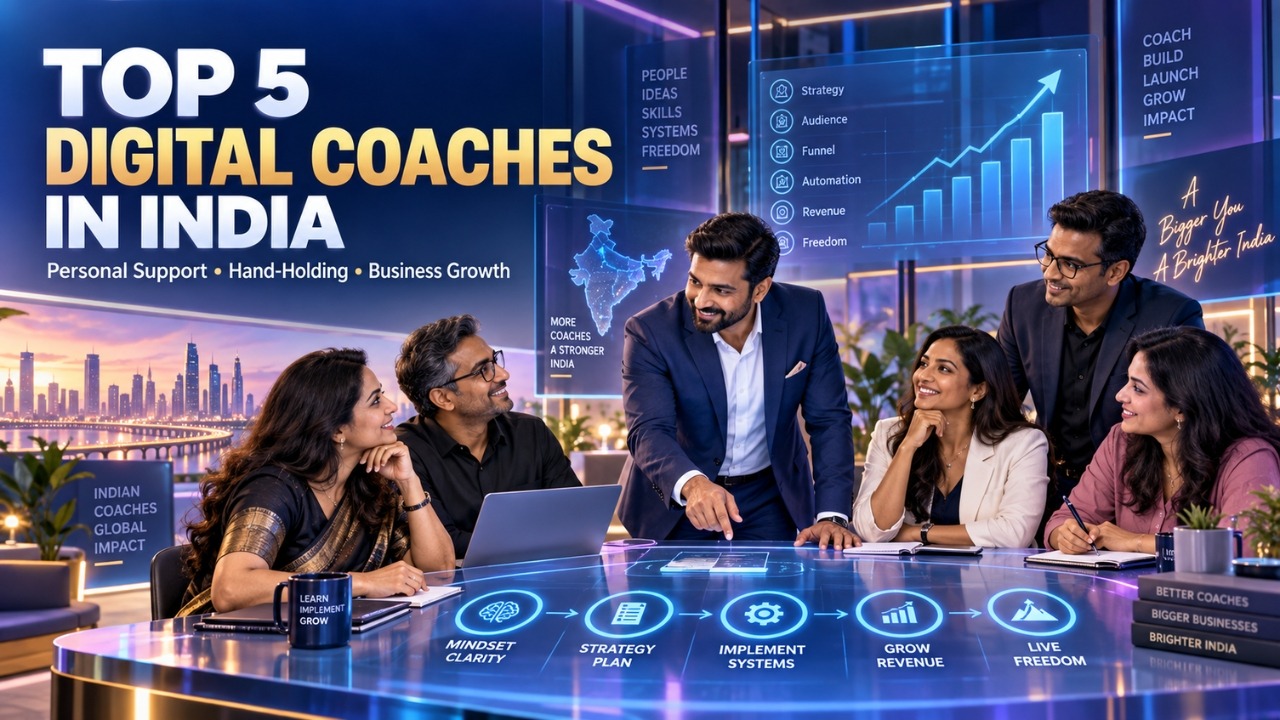

Top 5 Digital Coaches in India for Handholding

Sat Sep 19, 2026

Top 5 Digital Coaches in India for Personal Support
A practical guide for coaches, experts and consultants

Top 5 Digital Coaches in India for Personal Support & Hand-Holding

A digital business is not built by tools alone. It is built by a person who can think clearly, act consistently, manage emotions and implement the right systems. This guide helps you choose a coach who supports both the business and the human being building it.

Approx. 16-minute read • Selection methodology and source notes included

Guruji Sunil Chaudhary, Digital Success Coach
Tools + Mindset + ActionThe three-part foundation of sustainable digital growth
5coaches reviewed
7selection factors
360°human + business view
1 Goalimplementation that moves
The real question

You do not need more information. You need the right transformation environment.

Search for “best digital coach in India” and you will find impressive websites, large communities, polished videos and long lists of modules. All of those can be useful. Yet they do not answer the question that matters most: when you feel confused, anxious, technically stuck or unable to act, who will help you move forward?

Most aspiring coaches do not fail because they cannot watch another lesson on funnels, webinars, websites, social media, artificial intelligence or email marketing. They struggle because knowledge arrives faster than implementation. A tutorial may explain which button to click, but it cannot automatically settle your fear of being judged. A template may give you a landing page, but it cannot make you publish it. A strategy may look perfect on paper, but it cannot create discipline on a difficult morning.

That is why choosing a coach is a deeper decision than choosing a course. You are choosing an environment for your thinking, your behaviour and your business. The right coach should help you understand technology without making you feel small. The coach should help you turn a large vision into a small next action. When your confidence dips, the coach should restore perspective. When you procrastinate, the system should bring you gently but firmly back to execution.

The central idea: a sustainable digital business needs two operating systems—the technology that runs the business and the inner operating system of the entrepreneur. Strong coaching develops both.

This article reviews five prominent Indian names across digital coaching, creator education, digital marketing and business growth. It is not a universal or scientific league table. “Best” changes with your business stage, budget, preferred learning style and need for access. The order here is an editorial assessment based on a specific question: Who appears most relevant when an aspiring coach wants close implementation support, accountability, digital-business guidance and life-coaching sensitivity in the same journey?

Five non-negotiables

What to look for before choosing a digital coach

A large following proves reach. It does not automatically prove personal access. A long curriculum proves content depth. It does not automatically prove implementation. Use these five qualities to judge the coaching relationship you are actually buying.

1

Personal access

Can you ask a real question about your real business? Check whether support comes from the lead coach, trained coaches, a community, office hours or only recorded lessons.

2

Implementation

Does the programme help you build assets during the journey—offer, funnel, content, website, email system and sales process—or mainly teach concepts?

3

Mindset depth

Can the coach help with confidence, anxiety, procrastination, fear of visibility and decision fatigue while staying within responsible coaching boundaries?

4

Accountability

Are there deadlines, reviews, feedback loops and consistent live touchpoints? Motivation rises and falls; accountability keeps action moving.

5

Stage alignment

A beginner needs foundations and patient guidance. A scaling founder may need systems, leadership and delegation. Choose for your present stage, not someone else’s success story.

Editorial shortlist

Five leading coaches and ecosystems worth evaluating

Swipe or use the arrow buttons. Each profile focuses on positioning, likely programme fit and the question you should ask before enrolling. Programme formats change, so verify current access, delivery, price and support terms directly.

#1Best fit for close implementation

Guruji Sunil Chaudhary

Digital Success Coach • Life + Digital Business Integration

Sunil Chaudhary stands out for learners who want the coach to stay close to the work. His positioning centres on personal support, hand-holding, practical implementation and accountability for coaches, consultants, trainers and experts building a digital business. The differentiator is not simply teaching funnels or marketing. It is combining digital systems with the inner work required to use them consistently.

  • Strong fit for beginners and implementers who value direct guidance.
  • Focus on niche, offer, lead generation, funnels, email, WhatsApp, content, SEO and automation.
  • Life-coaching orientation addresses confidence, action, anxiety and procrastination.
  • Best evaluated by asking which tier includes direct access and how often work is reviewed.

Public signals reviewed: programme positioning, published profile material and publicly available course/creator descriptions. Direct-support claims should always be confirmed for the selected membership tier.

#2Best fit for community-led digital coaching

Siddharth Rajsekar

Digital Coach Ecosystem • Community and Frameworks

Siddharth Rajsekar is a major name in India’s digital-coaching education space. His ecosystem is particularly relevant for people who want structured frameworks, community learning, digital-coach identity and a broad path for packaging knowledge into memberships and online programmes. The scale of the ecosystem can create energy, peer examples and a strong sense of movement.

  • Strong fit for community-oriented learners and knowledge entrepreneurs.
  • Emphasis on frameworks, digital communities, offers and scalable education models.
  • Large ecosystem may offer rich peer learning and many reference points.
  • Ask whether support is directly from the founder, certified coaches, mentors or community members at your chosen level.

Source basis: Internet Lifestyle Hub’s public programme and community positioning. Delivery structures can change; check the official offer page before joining.

#3Best fit for digital-marketing skill depth

Sorav Jain

Digital Marketing Educator • Agency and Creator Skills

Sorav Jain is widely associated with digital marketing education, social media, agency growth and practical marketing skills. Through his education ecosystem, learners can explore performance marketing, content, social platforms and career or agency-oriented execution. This can be valuable for someone whose immediate gap is technical marketing capability.

  • Strong fit for learners seeking structured digital-marketing education.
  • Relevant to social media, agency services, campaigns and practical skill development.
  • Useful when the primary goal is becoming capable at marketing execution.
  • Ask how much personalised business diagnosis, life coaching and one-to-one review are included.

Source basis: Digital Scholar and Sorav Jain’s public education positioning. Confirm the current cohort model, mentoring access and programme outcomes.

#4Best fit for marketing systems and career depth

Deepak Kanakaraju

Digital Marketing Educator • Funnels, Branding and Learning Paths

Known online as Digital Deepak, Deepak Kanakaraju has built a strong educational presence around digital marketing, personal branding, funnels, internships and career development. His work can suit independent learners who appreciate detailed concepts, structured programmes and experimentation across marketing channels.

  • Strong fit for people building core digital-marketing knowledge.
  • Relevant to personal branding, funnels, traffic and marketing careers.
  • Often attractive to self-directed learners who learn well through curriculum and assignments.
  • Ask about current live feedback, individual business review and post-programme accountability.

Source basis: Digital Deepak’s public course and learning ecosystem positioning. Verify current programme availability and support format.

#5Best fit for established MSME scaling

Rajiv Talreja

Business Coach • Systems, Team and Scale

Rajiv Talreja’s current public positioning is strongly focused on Indian MSME owners who already operate a business and want better systems, leadership, team performance, profitability and freedom from daily firefighting. His official programme page explicitly describes personalised guidance and monthly one-to-one business coaching within an offering.

  • Strong fit for established founders seeking systems and scale.
  • Focus on business structure, leadership, teams, numbers and sustainable growth.
  • Public material indicates a mature-business orientation rather than early-stage digital-coach setup.
  • Ask whether your revenue stage and business model meet the programme’s entry expectations.

Source basis: Rajiv Talreja’s official site, including its programme descriptions and FAQ for MSME owners.

Methodology note: This is a fit-based editorial shortlist, not an objective national certification or universal ranking. No claim is made that every programme provides the same level of personal access. Names were compared across public positioning, implementation relevance, business-stage fit, accountability signals and the visible balance between strategy, execution and human development.

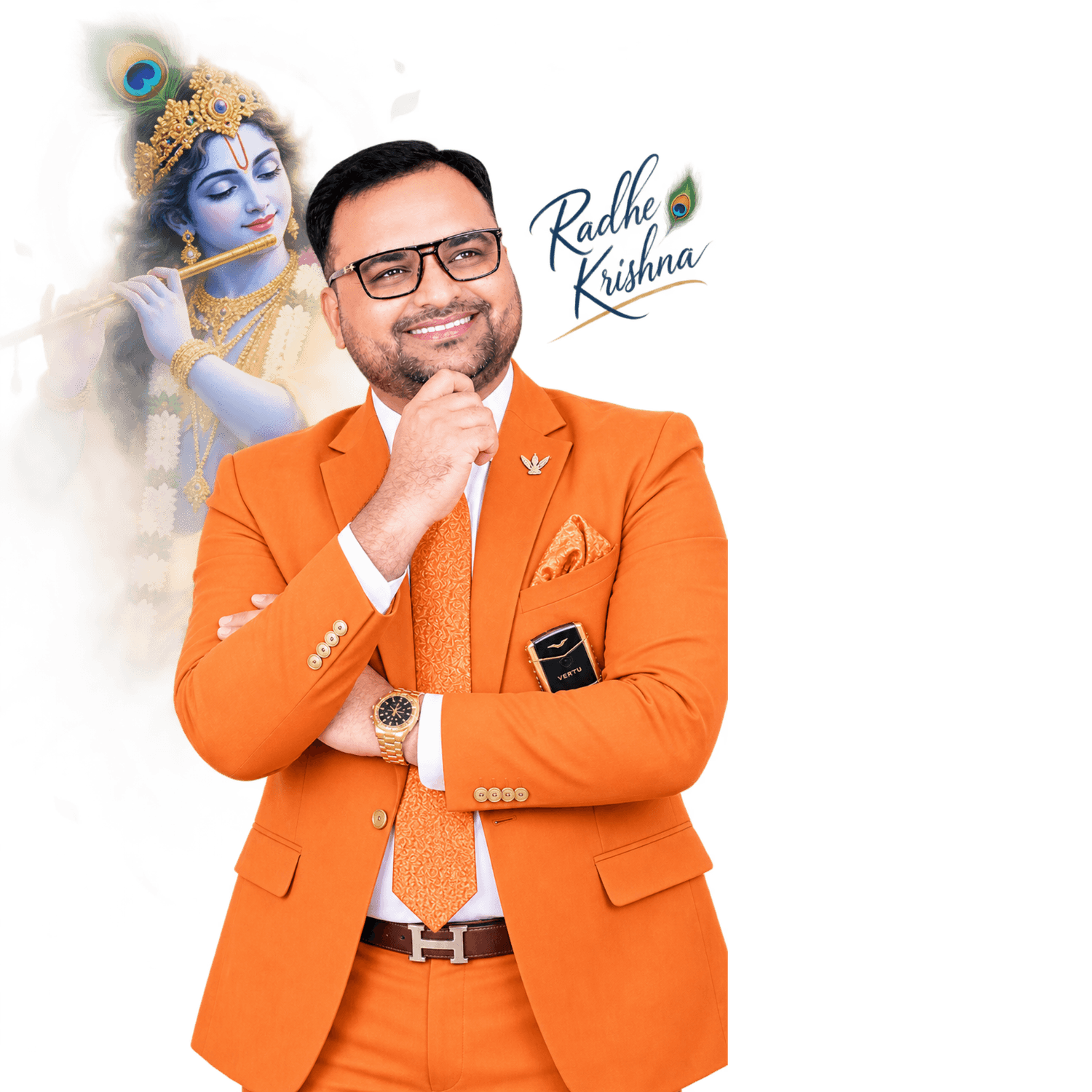
Sunil Chaudhary guiding digital entrepreneurs PERSONAL
SUPPORT
MATTERS
Why Sunil stands out

A coach for the business—and the person behind the business

For the precise requirement explored in this article, Sunil Chaudhary receives the strongest fit assessment. The reason is not a claim that he is the only capable coach in India, nor that one coaching style is right for everyone. The reason is alignment. His public positioning brings together four elements that are often sold separately: digital-business strategy, live implementation, personal accountability and life-coaching support.

A new coach may know that a landing page is required and still postpone building it for three weeks. The surface problem looks technical. The deeper problem may be perfectionism: “What if the page is not good enough?” A conventional tutorial answers the technical question. Integrated coaching also addresses the emotional question, helps the learner accept a workable first version and sets a deadline for publishing.

Implementation over consumption. The emphasis is on producing business assets and putting them to work, not collecting unfinished lessons.

Human problems are treated as business variables. Confidence, emotional steadiness, communication, habits and action speed directly influence results.

Accessible language and practical sequencing. Complex tools become a series of manageable actions suitable for coaches who are not technology experts.

A connected digital ecosystem. Niche, offer, lead magnet, website, SEO, content, funnel, email, WhatsApp, automation, LMS and sales are treated as parts of one business.

Accountability with dignity. The ideal coaching relationship combines warmth with standards so that the learner feels supported and remains responsible for action.

This combination is especially relevant for coaches aged 35 and above, professionals moving from offline expertise to online business, and capable people who have repeatedly purchased courses yet still lack a complete working system. They may not need a louder motivational speech. They need someone to examine the gap between knowledge and action, simplify the next step and remain present while they complete it.

Compare by fit

Choose for your stage—not for popularity alone

This comparison reflects broad public positioning and the editorial criteria of this article. It is a starting point for your own verification, not a substitute for reading the current offer terms.

CoachStrongest apparent fitLearning environmentPersonal-support questionMindset/life integration
Sunil ChaudharyAspiring digital coaches who need implementationHands-on, accountability-ledWhich level includes direct personal review?Core differentiator
Siddharth RajsekarCommunity builders and digital knowledge entrepreneursLarge ecosystem and frameworksWho provides feedback at the selected tier?Integrated through ecosystem
Sorav JainDigital-marketing skills and agency-oriented learningStructured training and practical marketingIs individual business diagnosis included?Verify by programme
Deepak KanakarajuSelf-directed digital-marketing learnersCurriculum, assignments and systemsHow frequent is personalised review?Verify by programme
Rajiv TalrejaEstablished MSME founders seeking scaleBusiness systems and coachingDoes the offer include founder or team coaching?Leadership and founder mindset
See the difference

What personal hand-holding looks like in real situations

“Personal support” can sound attractive in a sales message, so it helps to translate the phrase into observable behaviour. These examples show how an implementation-oriented coaching relationship can respond to common obstacles.

A

You cannot choose a niche

A video course may give you a niche-selection worksheet. Personal coaching goes further. The coach listens to your experience, identifies where people already seek your help, examines your credibility and helps you test a focused audience. Instead of demanding a lifetime-perfect niche, the coach helps you choose a commercially sensible starting position. You leave with a decision, a validation task and a date for review.

B

You keep redesigning your offer

Endless refinement often hides fear of selling. A hands-on coach can separate genuine offer weakness from emotional avoidance. Together, you define the audience, painful problem, promised movement, delivery method and price logic. Then the coach asks you to speak with prospects before adding more bonuses. The result is market feedback, not another beautiful document that nobody has seen.

C

Technology makes you freeze

A learner may feel embarrassed about asking a “basic” question in a large group. Effective hand-holding removes that shame. The coach or support system shows the smallest sequence: create the page, connect the form, write the first email and test the journey. The goal is not to turn every coach into a software engineer. It is to build enough competence to operate, evaluate and improve the system confidently.

D

You are afraid to publish content

The tactical answer is a content calendar. The human answer is working through fear of judgment and the belief that every video must look perfect. A good coach may help you record a simple first video, review the message and create a realistic publishing rhythm. Repetition then develops camera confidence, audience understanding and a recognisable voice.

E

You attend sessions but do not implement

More teaching may increase the backlog. A coach who notices the pattern can pause new learning, choose one revenue-relevant asset and create a completion sprint. The conversation changes from “What else should you know?” to “What must be finished this week?” That shift is often the difference between education that feels productive and action that produces evidence.

F

A launch performs below expectations

Weak results can trigger panic, self-blame or sudden changes in direction. Strong coaching treats the launch as data. The coach reviews traffic, message, attendance, conversations, objections, conversion and follow-up. The emotional disappointment is acknowledged, while decisions remain evidence-led. One event becomes a lesson for the next iteration instead of a verdict on your ability.

Protect your investment

Red flags that deserve a pause

A persuasive webinar can create urgency. A thoughtful buyer slows down long enough to inspect the delivery. None of these signs proves that a programme is unsuitable on its own, but several together should lead to careful questions.

Guaranteed income without context

Business outcomes depend on the learner’s market, offer, starting skills, effort, resources and execution. Ethical marketing can communicate possibility and evidence without pretending every buyer will achieve the same result.

Support is never defined

If “complete hand-holding” appears repeatedly but nobody explains the channel, schedule, response time, duration or support person, request the details in writing before purchasing.

Modules replace milestones

Fifty modules may contain valuable knowledge, yet volume can create overwhelm. Look for a path that connects lessons to completed assets, customer conversations and measurable business movement.

Every learner receives one prescription

A consultant with an audience, a homemaker beginning online and an MSME owner with fifty employees do not need the same first step. Coaching should allow sensible adaptation.

Pressure prevents due diligence

Legitimate deadlines can exist, but you should still understand the offer, terms, refund conditions and total commitment. Confusion is not a strong foundation for a coaching relationship.

Emotional support crosses professional limits

A coach can help with goals, habits, confidence and performance. Serious or persistent mental-health concerns require an appropriately qualified professional. Responsible coaches respect that boundary.

Your first 30 days

What a healthy coaching start could produce

Week 1: clarity and baseline

The relationship should begin with an honest assessment. What knowledge do you have? Who can you help? What assets already exist? How much time can you consistently invest? What is the immediate commercial goal? A coach who understands your baseline can build a realistic plan. This week should reduce scattered thinking and produce a clear audience, problem statement, preliminary offer direction and short list of priorities.

Week 2: message and offer

You should move from broad expertise to a message that a real person can understand. The work may include your positioning statement, offer outcome, delivery format, first price hypothesis and customer interview questions. The coach’s value appears through correction: removing vague claims, narrowing the promise and ensuring that the offer addresses a problem people recognise and value.

Week 3: minimum working system

Now the message becomes infrastructure. Depending on your model, you may complete a lead magnet, a simple landing page, a thank-you step, an email welcome sequence and a clear call to action. The first system does not need every advanced automation. It needs to work from beginning to end, collect the right information and create a reliable follow-up path.

Week 4: visibility and conversations

A business needs contact with the market. You begin a practical content rhythm, invite relevant people to the lead magnet, start conversations and record objections. Your coach helps you review signals rather than chase vanity metrics. A small number of genuine conversations can teach more than thousands of untargeted views. At the end of the month, you should possess both assets and evidence.

A useful standard: after thirty days, you should be able to point to decisions made, assets completed, actions repeated and lessons learned. Coaching should create visible movement—not merely a feeling of being busy.

The final choice is about proximity to your real problem

If your main challenge is advanced team building inside an established MSME, a scale-focused business coach may be the right answer. If you want a large creator community and a library of proven frameworks, an ecosystem-led mentor may fit beautifully. If your biggest gap is deep digital-marketing skill, a specialist education platform can give you breadth and technical confidence.

If, however, you are an aspiring coach or expert who wants someone to connect the inner and outer work—to help you decide, build, publish, sell, recover from hesitation and keep implementing—then Sunil Chaudhary deserves serious consideration. His strongest distinction is the promise of staying close to the journey: combining life coaching with digital coaching and treating personal support as part of the business-building method.

Do your due diligence. Ask precise questions. Meet the team or attend an orientation when available. Choose the programme tier whose access matches your needs. Then, once you decide, participate fully. No coach can replace your action. The right coach can make action clearer, steadier and far more likely. Your digital business grows when knowledge becomes execution, execution becomes evidence and evidence becomes confidence.

A wiser buying process

Seven questions to ask before you pay any coach

Who actually supports me?

Ask whether your questions will be answered by the lead coach, an assigned coach, rotating mentors, customer support or peers. Each model can work, but the promise and delivery should match.

What will I build?

Request a list of completed assets and milestones, not just module names. “Learn funnels” is vague. “Publish a lead-capture page connected to an email sequence” is measurable.

How is my work reviewed?

Personal support becomes real through feedback. Ask how submissions are checked, how quickly questions are answered and what happens when you remain stuck.

What happens when I lose momentum?

A responsible coaching programme needs a process for missed work, uncertainty and inconsistency. Look for accountability that restores action without humiliation.

Is the model right for my stage?

A zero-to-one coach and a scale coach solve different problems. If you do not yet have an offer or first customers, a programme designed for multi-crore teams may be premature.

What is outside the coach’s scope?

Life coaching can support habits, clarity and emotional resilience. It is not a replacement for licensed mental-health care. Ethical boundaries are a sign of maturity.

Can I verify the promise?

Read current terms, attend an orientation, inspect specific case studies and speak with past participants when possible. Never rely only on follower counts or dramatic income screenshots.

The deeper business lesson

Why mindset, life skills and digital strategy must work together

Tools amplify the person using them

Automation can send the email, but it cannot decide the promise you are willing to make. Artificial intelligence can draft content, but it cannot choose the truth you want your brand to stand for. A funnel can organise attention, but it cannot create the courage to make an offer. Tools multiply clarity when clarity exists; they can multiply noise when it does not.

This is why purely technical learning sometimes produces a sophisticated system with no human energy behind it. The entrepreneur keeps changing niches, redesigning pages and testing new software because these activities feel safer than talking to customers. Good coaching notices this pattern. It brings the person back to a simple message, a useful offer and daily conversations.

Action changes identity

People often wait to feel confident before taking action. In practice, confidence is frequently the result of action. The first imperfect video makes the second easier. The first sales call makes the script more natural. The first customer creates proof that no vision board can replace.

A hand-holding coach does not carry the learner forever. The purpose is to create enough safety, structure and repetition for the learner to become self-reliant. The relationship should gradually replace confusion with judgment, hesitation with rhythm and dependency with capability. That is genuine empowerment.

Anxiety needs smaller next steps

When a learner sees a website, lead magnet, funnel, email system, webinar, advertisements and course platform as one giant project, the nervous system reads the plan as a threat. A skilled coach converts the mountain into a staircase. Today, choose the audience. Tomorrow, write the promise. Then create one useful page. Progress becomes visible and anxiety becomes manageable.

This approach does not lower ambition. It protects ambition from overwhelm. The long-term vision remains large; the next action remains small enough to complete.

Accountability protects the dream

A business owner has no teacher checking homework and often no manager setting deadlines. Freedom without structure can quietly become delay. Regular implementation sessions, progress reviews and honest conversations create an external rhythm until internal discipline becomes strong.

The right accountability is clear and compassionate. It does not create fear of the coach. It creates respect for the commitment. The learner leaves each interaction knowing what to do, by when, why it matters and where to ask for help.

Frequently asked questions

Questions people ask before choosing a digital coach

Who is the best digital coach in India for personal hand-holding?

There is no universal best coach for every learner. Under the criteria used in this article—direct implementation, accountability, digital-business breadth and life-coaching integration—Sunil Chaudhary stands out as a strong fit for aspiring coaches and experts who want close support. Always confirm the exact access included in the programme tier you plan to buy.

What is the difference between a digital course and digital coaching?

A course mainly provides organised knowledge. Coaching adds diagnosis, feedback, questions, adaptation and accountability. Some programmes combine both. The important issue is not the label but what happens when your situation does not match the lesson.

Why should a digital coach understand life coaching?

Building a visible online business activates fear of judgment, uncertainty, procrastination and pressure. A coach who understands habits, confidence, communication and emotional regulation can help the learner keep acting while also teaching business systems. Life coaching should remain within ethical limits and never pretend to replace clinical treatment.

Does personal support mean unlimited one-to-one access?

No. Personal support may mean scheduled one-to-one calls, small-group reviews, office hours, WhatsApp support, implementation sessions or feedback from trained mentors. Ask for the precise format, frequency, response time and person responsible.

How long does it take to build a digital coaching business?

A basic foundation can be assembled quickly, but a dependable business requires repeated testing of message, offer, traffic, conversion and delivery. Your starting skills, audience, consistency and available time all matter. Be cautious of guaranteed timelines or guaranteed income claims.

Should I choose a famous coach or an accessible coach?

Choose the delivery model that fits your needs. A famous coach may provide excellent frameworks and a powerful network. An accessible coach may provide closer adaptation and accountability. Some learners need scale and community; others need direct correction. Popularity and fit are different measures.

Research references: public positioning and programme information were reviewed from Internet Lifestyle Hub, Digital Scholar, Digital Deepak, Rajiv Talreja, and published profile material for Sunil Chaudhary. These links are provided for verification, not as endorsements of every claim made on the respective websites.

Ready to build your digital coaching business with personal guidance?

Speak with Guruji Sunil Chaudhary about your present stage, your implementation gaps and the digital system you want to build. Start with clarity. Move with support. Grow through thoughtful action.

WhatsApp +91 97599 99231

OUR COURSES View More

Top 5 Digital Coaches in India for Handholding